
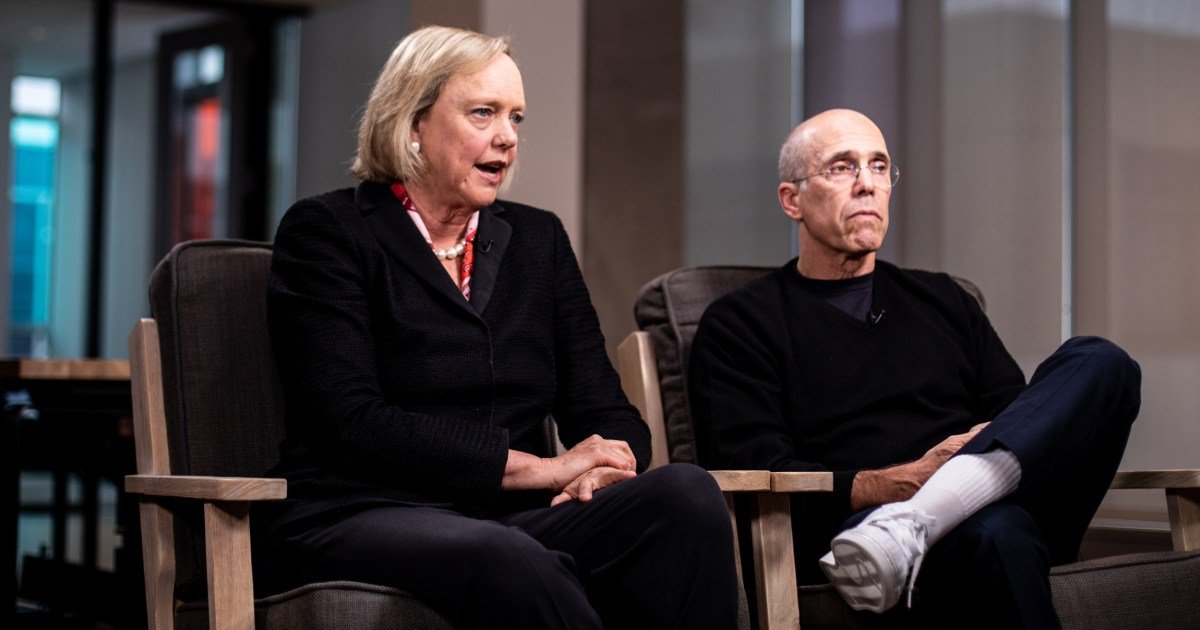
Streaming service Quibi — short for "quick bites" — was touted by its co-founders Jeffrey Katzenberg and Meg Whitman as a platform that would radically transform the way people, particularly younger viewers, consumed content on the go. Yet just six months after launching their new company, the duo announced it would be shutting down after failing to gain traction with subscribers.
While the project faced skepticism from the beginning, it was highly anticipated because of Katzenberg's reputation as a Hollywood heavyweight. As former chairman of Walt Disney Studios and a co-founder of DreamWorks Animation, the consensus seemed to be that if anyone could disrupt mobile viewership patterns, it would be Katzenberg.
It is impossible to pinpoint exactly why Quibi failed, but several factors likely contributed to its downfall, including content that failed to generate buzz, an inability to grow its subscriber base, the Covid-19 pandemic, and the competitiveness of the streaming landscape.
While discussing Quibi's failure on a call with investors, Katzenberg and Whitman cited the unique environment created by the Covid-19 pandemic and suggested that their idea wasn't suitable to be a standalone subscription service. No doubt the pandemic played a role in Quibi's inability to resonate with its intended users. Designed to disrupt mobile viewing, it aimed for short, five- to 10-minute episodes of shows to appeal to users on the go. However, just before Quibi launched, the Covid-19 pandemic resulted in restrictive stay-at-home orders across much of the country.
Quibi's on-the-go audience found itself stuck at home, which was problematic since it was built to be accessible solely on mobile devices. Initially, there was no way to consume its content on a television. Eventually, Quibi had to adjust its model to allow subscribers to use AirPlay and Chromecast, and it launched apps for Apple TV, Android TV, and Fire TV.
In June, Katzenberg stated he attributed "everything that has gone wrong to coronavirus." However, during an appearance on CNBC, he walked back those comments, saying it wasn't "fair" to place all the blame on the pandemic. He remarked that "other companies have faced the challenge of Covid and they’ve managed to find the path."
As Katzenberg conceded, the pandemic wasn't the only source of Quibi's problems. The streaming landscape it sought to disrupt is filled with powerful competitors like Netflix and Amazon, which have substantial budgets. While Quibi raised $1.75 billion from investors, it wasn't enough to compete against the financial resources of larger companies.
Whitman noted that being a startup presents challenges that established companies don't face, and launching in a big way was essential. In June, reports indicated that Quibi expected to have spent $1 billion of the $1.75 billion by the third quarter of 2020, with projections for additional fundraising to remain viable.
Quibi lacked the advantage of established subscription services like Disney+, HBO Max, and NBCUniversal's Peacock, which had extensive catalogues of already popular content. Instead, Quibi opted for original content featuring A-list stars, which required at least one massive hit to attract subscribers. Though shows with stars like Kevin Hart, Jennifer Lopez, and Steven Spielberg entertained viewers, they failed to generate the necessary growth.
Rich Greenfield of LightShed Partners expressed the difficulty for new players to break in as a subscription app without a free initial offering. While Quibi had aimed for over 7 million subscribers by its first anniversary, its initial downloads were underwhelming. Without a free tier, it offered a 90-day free trial, resulting in 2.6 million installations in its first month. Yet, as the free trial ended, paying customer numbers dropped significantly.
Quibi's subscriber total reportedly stood at just 500,000 weeks before announcing its closure. Issues arose with the app itself, such as complaints about the inability to screenshot content, which hindered sharing and generating buzz. Although the technology promised real-time switching between horizontal and vertical views, it didn't entice enough viewers. Furthermore, legal challenges regarding patent infringement indicated another hurdle.
Ultimately, Katzenberg and Whitman recognized that the "product market fit was wrong," admitting that their efforts weren't sufficient. They noted a slowdown in momentum over the summer despite various attempts to improve marketing and packaging. Whitman reflected that asking users to pay for an unfamiliar product was misguided, indicating a lack of consumer support ultimately led to Quibi's demise.
Katzenberg and Whitman are now working on winding down the company and returning money to investors.