
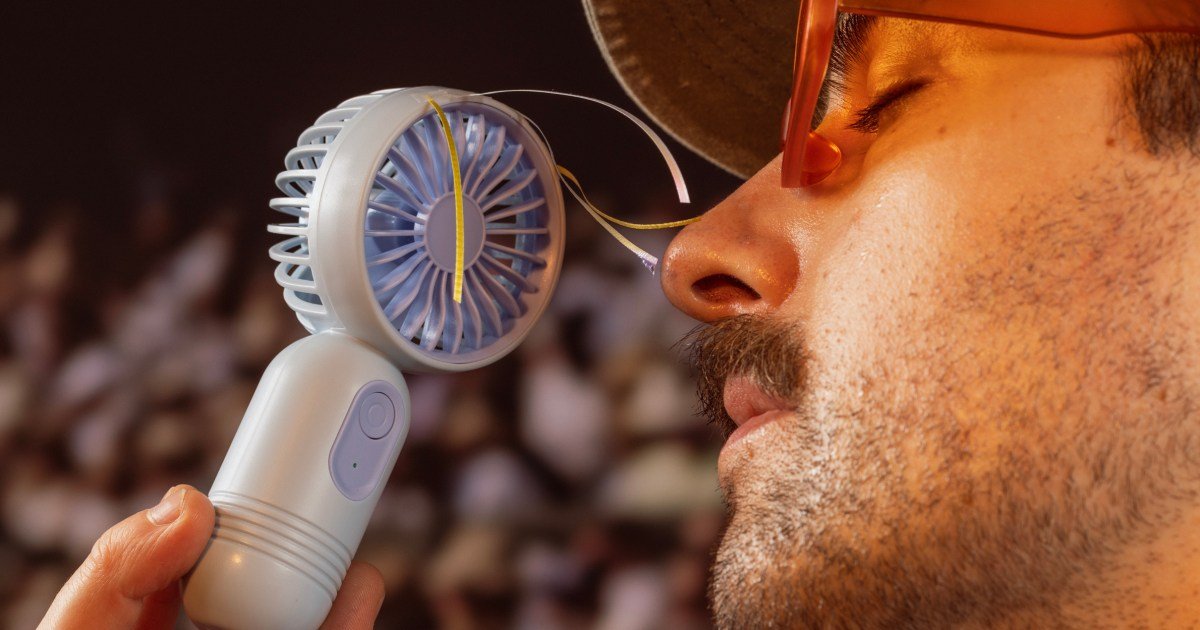
Mini portable fans have rapidly become summer mainstays to mitigate the sweltering heat. While the gadget may be hot, experts say the reasons for the popularity are not: climate change and fast fashion. Long popular in humid climates, the mini blasters have proliferated in the West thanks to TikTok and platforms like Amazon, Shein, and Temu.
Typically under $10, the battery- or USB-powered personal fan comes in a variety of styles. Users can wear it around their necks, install it in their car, and even clip it on their handbag. Handheld fans are cropping up everywhere, from influencer posts to playgrounds. The rapid growth of affordable accessories from online retailers like Temu and Shein, where fans cost as little as $4, is a selling point particularly for cash-strapped Gen Z buyers.
The global personal fan market is set to surpass $1 billion by 2033, nearly doubling its current value. In the U.K., consumers bought 7 million portable mini fans in the past year. Google searches for portable fans have increased steadily, peaking in June. The states with the highest search interest include Louisiana, Mississippi, Alabama, Georgia, and South Carolina.
The rise of mini fans may be influencing fast-fashion trends. Some influencers have leveraged the trend to launch their own brands. The Asia-Pacific region accounted for 55% of the growth of the portable fans market, generating nearly $140 million in 2021.
At the same time, the handheld fan boom raises serious environmental concerns. Overconsumption of cheap products creates waste. The U.K.-based nonprofit Material Focus estimated that roughly 3.5 million fans have been discarded over the past year. Experts are questioning what happens to these items after summer ends.